August 1, 2026 · 6 min
Installing a Level 2 charger at a house: what the garage decides
Attached garage, detached garage, driveway or carport. The four are not variations of one job. They are four jobs.
A residential Level 2 installation is decided almost entirely by geometry: where the panel is, where the car stops, and what stands between them. Everything else, including which charger you bought, is detail, which is why a home charging station is mostly a circuit.
Attached garage
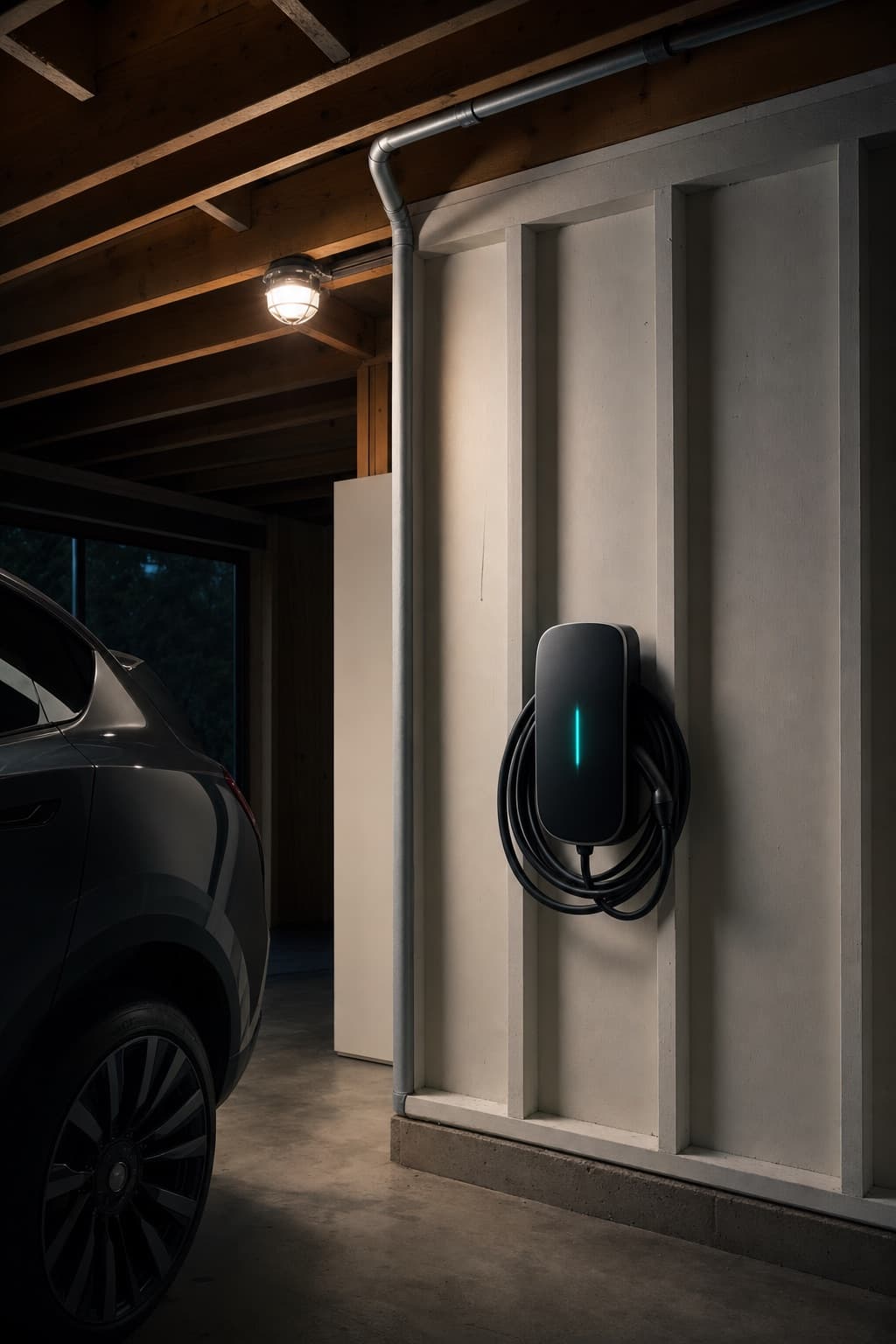
The best case, and the most common one. The panel is frequently in the garage itself or on the other side of its wall, which turns the run into a few feet of surface conduit. The decision that actually matters here is not electrical but positional: mount the unit on the side the charging port is on, at a height that lets the cable hang without touching the floor, and far enough back that the door still closes over the car.
One thing worth spending on at this stage: if there is any chance of a second electric vehicle, say so now. Pulling a slightly heavier conductor and leaving room for a second breaker costs a fraction of doing the whole job twice.
Detached garage
The expensive case, and the one where quotes diverge most. The circuit has to leave the house, cross open ground and re-enter, which means either an overhead span or a buried run at code depth. If a driveway sits in between, the ground is concrete and the cost of crossing it is the largest single item in the project and the clearest of the cost drivers.
There is often a cheaper alternative worth asking about: many detached garages already have a feed of their own. If a subpanel is out there, the circuit may only need to travel from that subpanel to the wall, and the load calculation is done on the subpanel rather than the house. That single question changes the shape of the project.
Driveway, uncovered
Perfectly normal, with two consequences. Everything on the outside has to be rated for outdoor use, including the enclosure and any disconnect, and the mounting has to survive weather and the occasional reversing car. A bollard or a wall on the correct side is worth more than a stronger anchor.
Cable management is not cosmetic outdoors. A cable that lies in standing water or across a walkway will be the reason the unit is replaced early.
Carport
Structurally the simplest of the outdoor cases, because there is usually a post or a beam to mount to and some protection from the weather. The question to settle early is whether the structure is attached to the house, because that decides whether the run counts as interior or exterior for routing purposes.
If you rent
The work is a permanent alteration to the property, which means it needs the owner’s agreement in writing, not verbally. It is worth asking for that first, because it is the most common reason a scheduled installation is cancelled at the door. The same is true, with more paperwork, in a condominium or an apartment building garage: see multifamily and HOA.
What to settle before anyone arrives
- Which side of the car the charging port is on.
- Where the car actually stops, not where it could stop.
- Where the panel is, and whether anything is stored in front of it.
- Whether a second vehicle is plausible in the next few years.
Those four answers turn a site visit into a quote, which is the second step of the installation sequence at a house. What they cannot settle is the spare capacity in the panel, which is a calculation and is our job. The detail of that is on panel and capacity.
Describe the house
Four questions, then a call. Where the car parks tells us most of what we need.
Level 2 Charge Pro installs Level 2 charging equipment: the dedicated 240-volt circuit, the panel work it depends on, the cable run, and the inspection that closes the job.