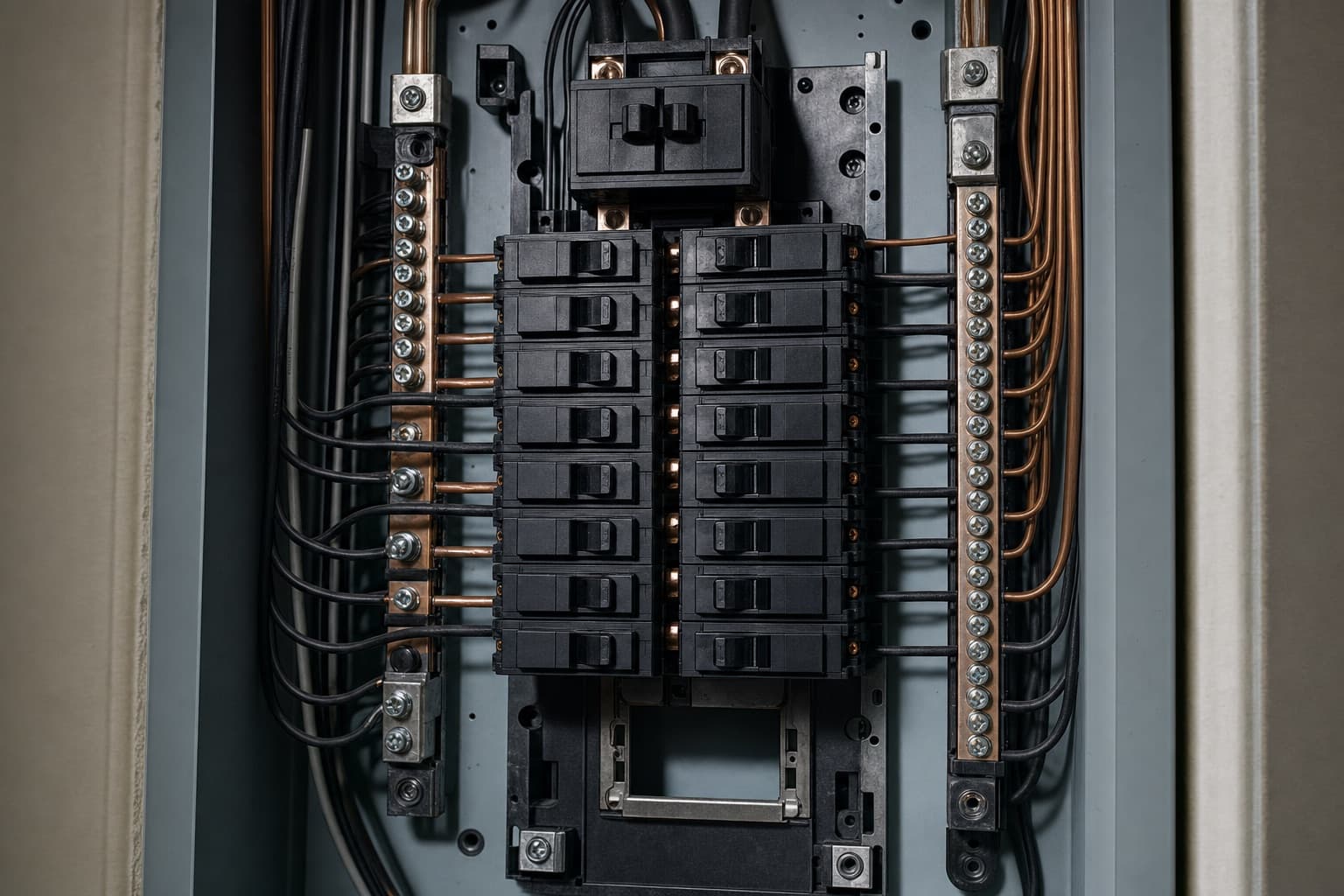
The panel decides: spare capacity, load calculations and the alternatives to an upgrade
Whether your service can carry a charger is settled by a load calculation, not by an opinion about how much electricity your household uses. This page explains what that calculation looks at, what happens when it comes back short, and the three ways around an upgrade.
Three separate questions people run together
“Do I need a panel upgrade?” is usually three questions wearing one coat, and they have different answers and different prices.
- Is there a physical slot free in the panel for another breaker? A yes-or-no question answered by opening the cover.
- Can the panel itself carry the additional load, its rating and its busbar?
- Can the incoming service carry it? This is the one that involves the utility, and it is the expensive one.
A full panel with plenty of service capacity is a manageable problem: a sub-panel, or a rearrangement, and the job proceeds. A service that is genuinely at its limit is a different project with a different calendar.
The load calculation
An electrician does not guess. There are defined methods for calculating the load of an existing dwelling, square footage, fixed appliances, heating and cooling, and the new continuous load a charger represents, and the result either fits inside the service rating or it does not.
One term is worth knowing because it explains a number that surprises people. A charger is treated as a continuous load, and circuits serving continuous loads are sized above the load they carry. That is why a charger rated at one figure requires a breaker and conductors rated higher, and why the capacity it consumes is more than the number on the box.
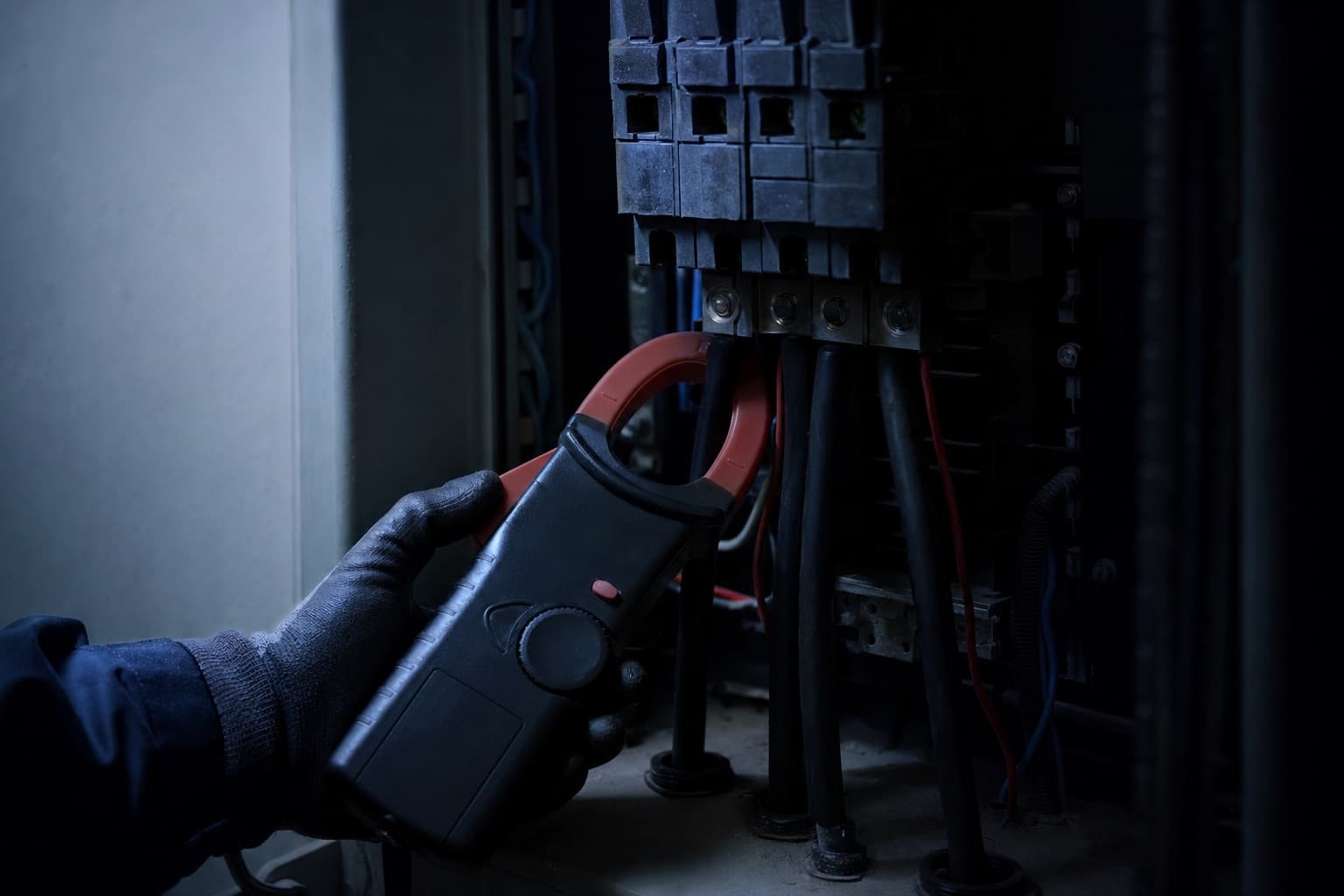
When the answer is “not as it stands”
There are three routes forward, and a good electrician will price the one that fits rather than defaulting to the largest.
Load management
Equipment that limits or schedules the charger's draw so the total never exceeds what the service can supply, by reducing charging when other large loads run, or by sharing capacity between two chargers. Where it is permitted and appropriate, it is frequently the difference between a straightforward job and a service upgrade.
A sub-panel or panel replacement
Where the service is adequate but the panel is full, out of date, or the busbar cannot take more, replacing or extending the panel solves it without involving the utility's side of the meter.
A service upgrade
New service conductors, a new meter arrangement, utility work and inspection. It is the most expensive answer and the longest one, because part of the schedule belongs to the utility rather than to your electrician. Where it is genuinely needed, it is also an improvement the property keeps.
How to find out cheaply, before anyone quotes
- Photograph the panel with the cover on, the main breaker's rating is usually printed on it, and again with the cover off if you can do so safely, showing the breakers.
- Note the large appliances: electric range, electric dryer, electric water heater, air conditioning, heat pump, pool equipment, a second charger.
- Note the age of the service if you know it, and whether the panel has ever been replaced.
- Do not remove the panel's inner cover. That is an electrician's job, and the outer photograph plus the appliance list is enough for a first conversation.
Those three pieces of information turn a vague enquiry into a quotable one, and they are what the intake form on this site asks for. Everything after that is on the cost page.
Frequently asked
Is a 100 amp service enough for an EV charger?
Sometimes, and it depends entirely on what else is connected. A 100 amp service in a house with gas heat, gas water heating and a gas range has a very different result from the same service in an all-electric home. Only the calculation answers it.
Can I avoid an upgrade with load management?
Often, where it is permitted locally and appropriate to the installation. It is worth asking about explicitly, a quote that goes straight to a service upgrade without mentioning it has skipped a cheaper option.
How long does a service upgrade take?
Part of it is your electrician’s schedule and part of it is the utility’s. The second part is the one that varies, and it is worth asking the utility directly what their current lead time is before committing to a date.
Last reviewed July 29, 2026.
Have the panel looked at before choosing equipment
A photo of the panel and a list of the big appliances is enough to start. It decides what circuit is possible, and therefore what equipment is worth buying.
Level 2 Charge Pro installs Level 2 charging equipment: the dedicated 240-volt circuit, the panel work it depends on, the cable run, and the inspection that closes the job.