October 26, 2026 · 3 min
Garage subpanel installation: attached or detached changes the rules
A subpanel in the garage gives a charger and a workshop their own breakers. Whether the garage touches the house decides how it is grounded and fed.
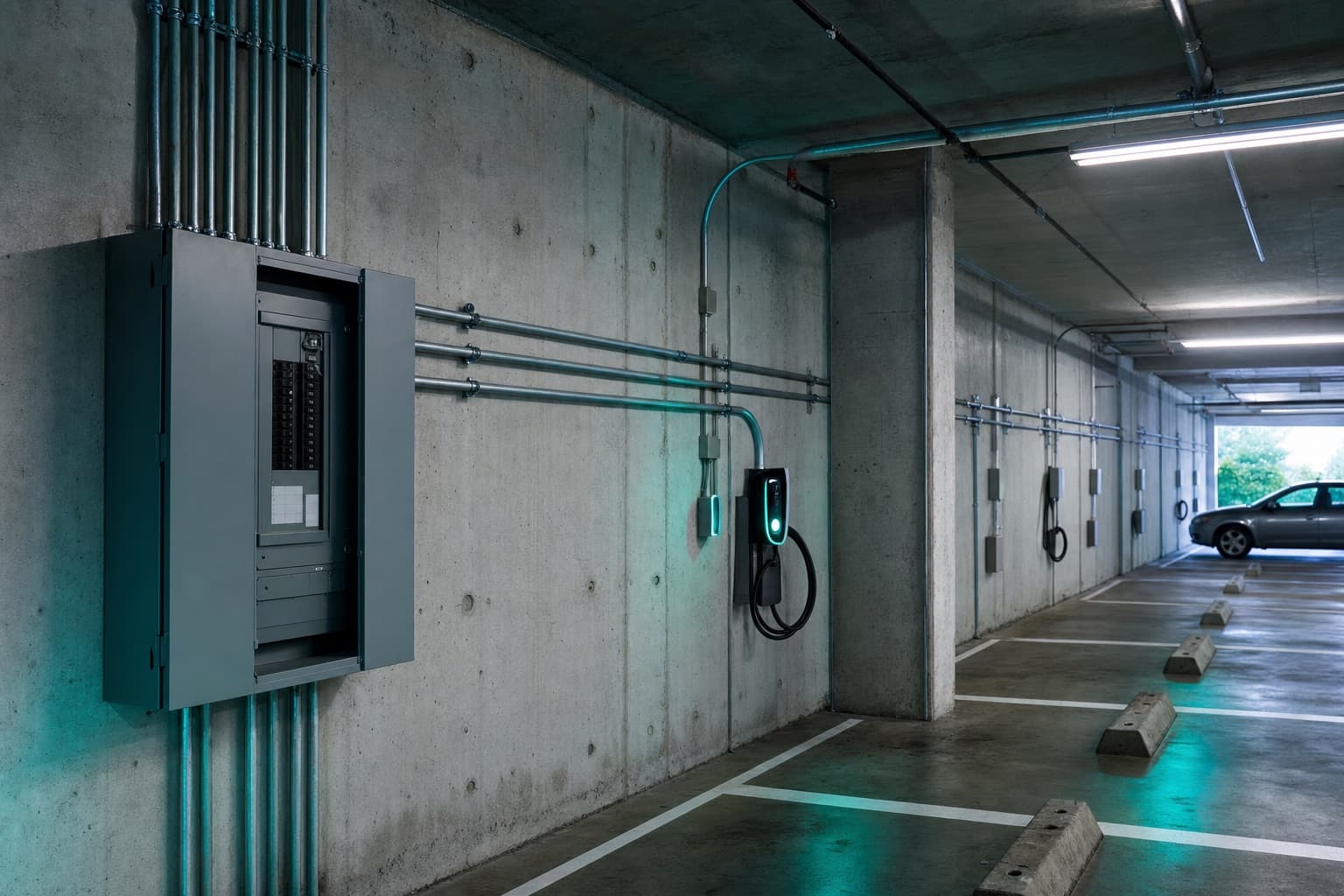
A garage subpanel is a small panel fed from the main panel, placed in the garage so that circuits for a charger, tools or lighting start there instead of running all the way back to the house panel. It does not add capacity to the house. It moves the breakers closer to the loads, which shortens runs and leaves room for future circuits.
When a subpanel makes sense
When the main panel has no free spaces, when the garage needs several circuits, or when the garage is far from the main panel and several long runs would cost more than one feeder. It is not a substitute for capacity: if the service cannot carry the new loads, a subpanel will not change that. The general case is covered in electrical subpanel installation.
Attached garage
In an attached garage, the subpanel is usually fed by a cable or conduit from the main panel, with four conductors: two hots, a neutral and an equipment ground. The neutral and ground are kept separate at the subpanel, which means the bonding screw or strap that comes with many panels is not installed. This is the most common mistake in amateur subpanel work, and it creates a shock hazard.
Detached garage
A detached garage is a separate structure. Under current code it generally needs its own grounding electrode, such as ground rods, connected at the subpanel, while still keeping neutral and ground separate and running an equipment ground with the feeder. It also needs a disconnecting means at the building. The feeder usually runs underground in conduit at the depth the code requires for that wiring method.
Sizing the feeder
The feeder and its breaker in the main panel are sized from the loads the garage will carry, calculated the same way as for the house. An EV charger on its own often accounts for most of it. Sizing the feeder generously costs little extra during the installation and avoids pulling a new one later. The charger’s place in the garage is worth deciding at the same time, as explained in charger location and cable run.
Protection and placement
The subpanel needs working clearance in front of it, a location that is not exposed to vehicle impact, and protection appropriate for a garage, which can include ground fault protection on many circuits under recent code editions. Mounting it on the wall a car pulls up to is a poor choice even when the space is available.
Permit and inspection
A subpanel is new electrical work and is permitted and inspected like any other. Inspectors look closely at the neutral and ground separation, the grounding electrode for a detached structure and the feeder size. The 100 amp subpanel article covers a common rating in more detail.
Planning for later
A garage subpanel is often the moment to plan for a second charger, a heat pump water heater or a workshop. Leaving free spaces and sizing the feeder for those loads is far cheaper than adding them later. Tell the electrician what you might add in the next few years, even if it is not certain.
Ask also for a labeled directory on the subpanel door from the first day. A garage panel tends to collect circuits over the years, and a clear directory is what lets the next electrician, or the next owner, work on it safely.
What to ask before the work starts
Ask how the feeder will be routed and protected, whether the garage is treated as attached or detached and why, and how the subpanel will be grounded. Ask how many free spaces it will have after the planned circuits are installed. For a detached garage, ask about the trench, its depth and how the lawn or driveway will be restored. The answers tell you whether the installer has looked at your garage or is quoting a standard job.
Want the panel question answered before the quotes?
Your panel rating, the charger you want and where it will go. Four questions, then a call.