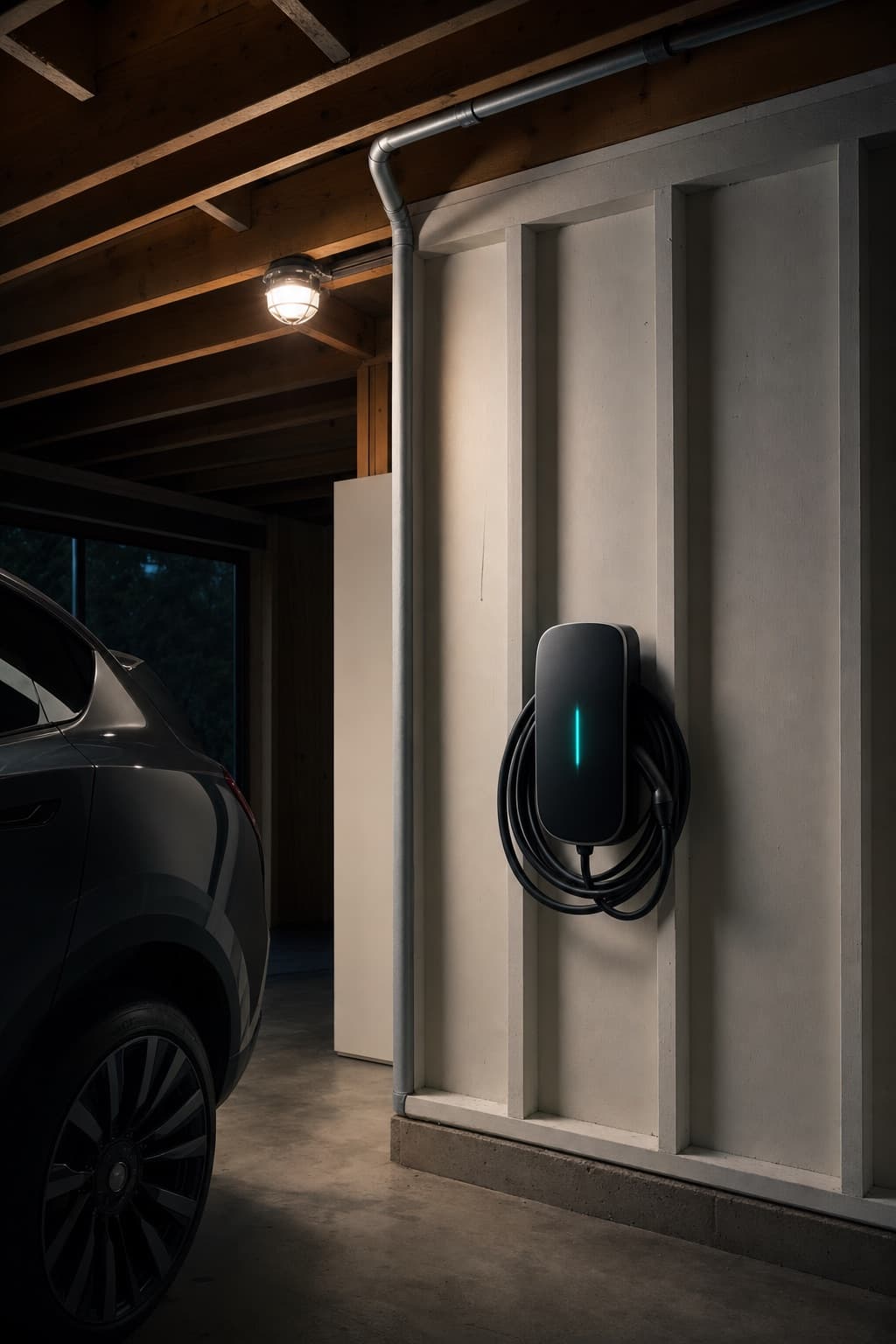
Home EV charger installation: garage, driveway, and the panel in between
At a single-family house the decisions are yours alone, which makes this the simplest version of the project. What varies is the geometry: where the panel is, where the car sits, and what stands between them.
The four common house situations
Attached garage, panel in the garage
The easy case, and worth recognizing as such. A short surface-mounted run, no finished surfaces disturbed, and a job that is often measured in hours. If this is your situation and a quote is large, the reason should be the panel, not the run.
Attached garage, panel elsewhere in the house
Cost follows the route. Through an unfinished basement or an accessible attic it stays modest. Through finished, occupied rooms it becomes drywall work, patching and paint, often by a second trade.
Driveway or carport
An outdoor installation: weather-rated equipment, sealed penetrations, and a mounting position that keeps the connector out of standing water and out of the way of a car door.
Detached garage
The step change, because the circuit has to cross open ground. That means a trench, conduit and reinstatement, and a prior question: what feeds the detached structure today, and can it carry a charger at all, or does the charger need its own run from the house?
If you rent
A charger is a permanent alteration to somebody else's property. Written permission from the owner comes first, and it is worth settling three things at the same time.
- Who owns the equipment at the end of the tenancy, and whether it stays or is removed.
- Who pays for the installation, and whether any of it is recoverable.
- Who pays for the electricity, and how that is measured if the meter is shared.
Some jurisdictions have statutes addressing charger installation for renters or condo owners; their scope varies considerably, and none of them removes the need for a conversation with the owner. If you are in a condo or an apartment building, the situation is different enough to deserve its own page.
Getting a useful quote for a house
- Photograph the panel, cover closed, main breaker rating visible, and the parking position from the doorway.
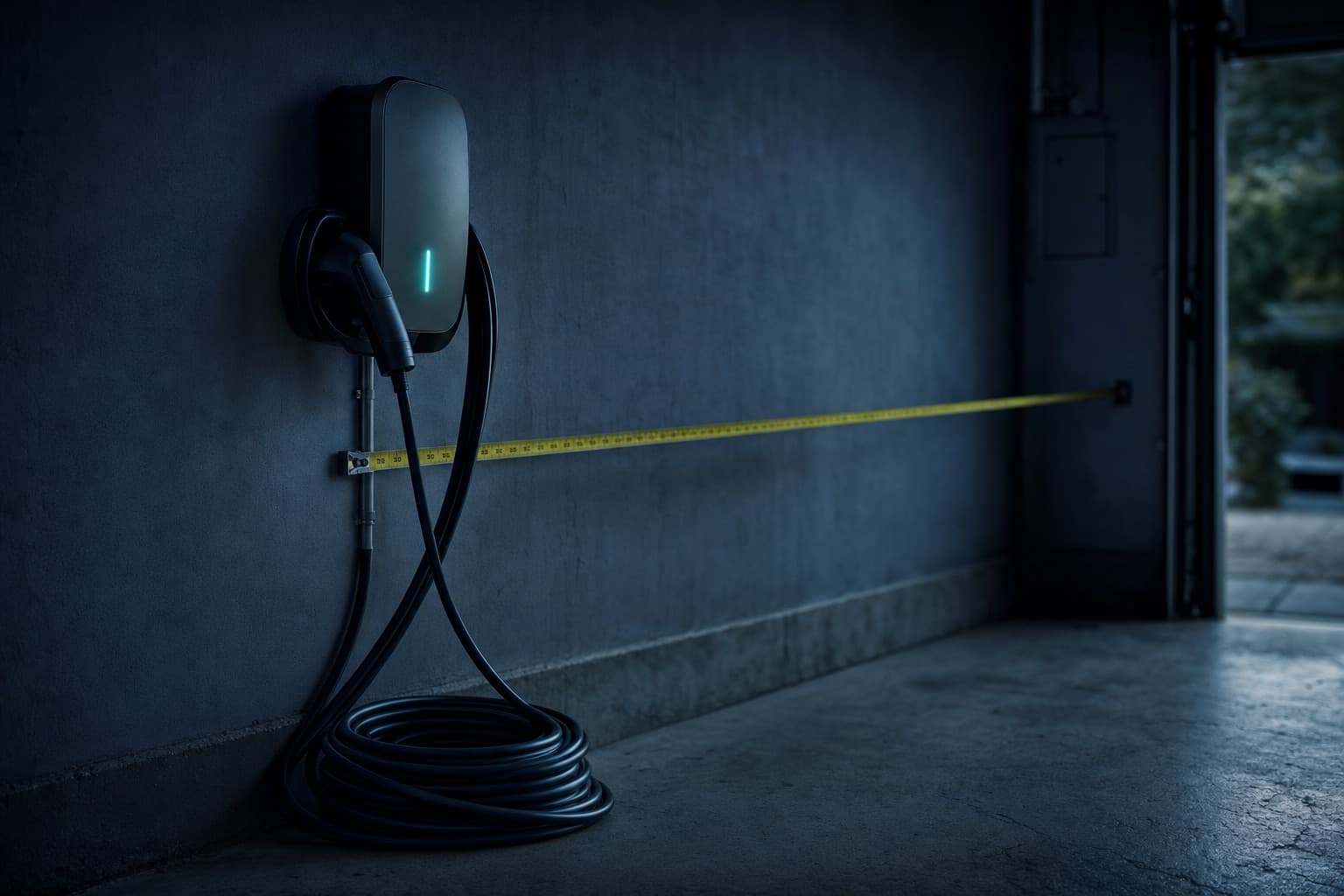
- Pace the distance between them along the route the cable would take, not in a straight line through walls.
- List the electric appliances: range, dryer, water heater, air conditioning, heat pump, pool.
- Note whether the run would cross finished space, and whether you care about the finish.
- Say when you want it done, and whether a second vehicle is likely.
That is five minutes of work, and it converts three vague quotes into three comparable ones, see what drives the cost.
Frequently asked
Will this raise my electricity bill a lot?
Charging a car uses meaningful electricity, that is the point of it. What varies is the rate: many utilities offer time-of-use plans where overnight charging is cheaper. Ask your utility what applies before assuming either the worst or the best.
Does a charger add value to a house?
That is a question for a local agent or appraiser rather than for this site. What is certain is that a documented, permitted, inspected installation is easier to explain to a buyer than an undocumented one.
Should I wait until I buy the car?
Having the panel assessed early costs little and can reveal a service constraint with a long lead time. Buying the equipment early is the part worth delaying, because the circuit that turns out to be possible should decide it.
Last reviewed July 29, 2026.
Related pages
- Location and cable runPosition the charger so the installation stays simple.
- Panel and capacityFind out whether a service upgrade is coming before it appears in a quote.
- What drives the costUnderstand a quote and compare bids that do not look alike.
- Permits and planningSequence the project so nothing blocks it late.
Describe the home
Parking, panel, distance, and whether the run crosses finished space. Four answers, and electricians can quote the same job instead of four different ones.
Level 2 Charge Pro installs Level 2 charging equipment: the dedicated 240-volt circuit, the panel work it depends on, the cable run, and the inspection that closes the job.