August 17, 2026 · 7 min
A Level 2 EV charger installation, end to end: what the work actually is
Not a box on a wall. A sequence: read the panel, calculate the load, choose the route, build the circuit, terminate it, commission it.
This is the head query of the whole subject, 6,600 searches a month, and it is also the vaguest. Most of what answers it online is a brand or a number. What the phrase actually names is a sequence of physical work on a building, and a reader who knows the sequence can read any quote, including ours. Here it is, in the order it happens.
It begins at the panel, not at the charger
The first act of a real installation is opening the electrical panel and reading it: the size of the service, how many slots are free, and what the existing breakers already claim. Everything downstream depends on that reading. An installer who quotes without it is quoting a different house than yours, which is the first of the tests in how to judge an electrician. The full picture of what a panel can and cannot absorb is on panel and capacity.
The load calculation
A Level 2 charger is a continuous load. It draws at or near its rating for hours at a stretch, night after night, which is a pattern almost nothing else in a house produces. The calculation asks one question: after everything already connected, does the service carry that pattern safely. The answer is yes more often than people fear, and when it is no, a lower commissioned output or a load management device usually answers before a service upgrade does.
The route
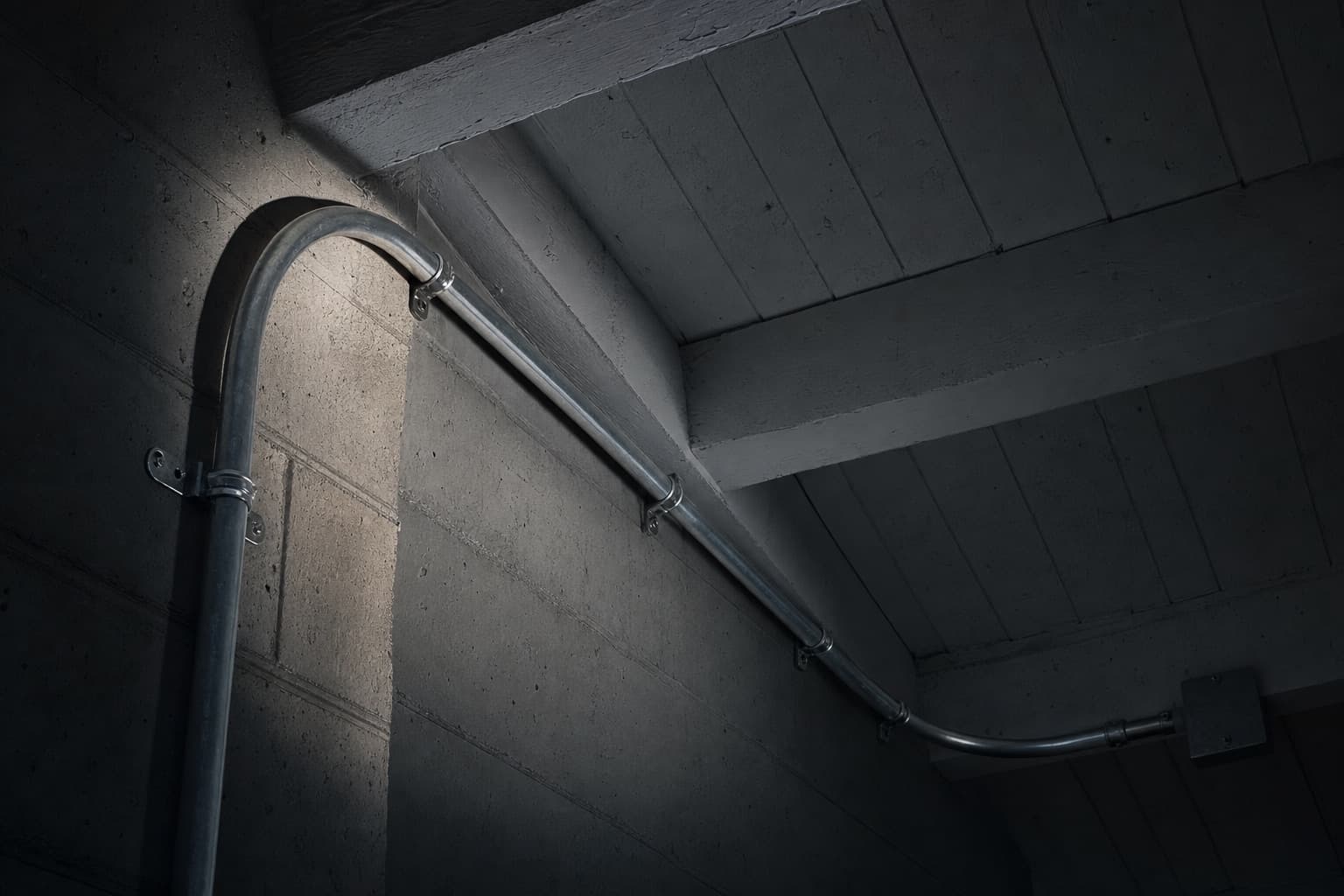
Between the panel and the parking space there is a path, and the path is most of the labour. Through an unfinished ceiling it is fast. Through finished walls, under a slab or across open ground to a detached garage it is a different day of work, sometimes a different trade. Walking that route, and pricing the specific one rather than a typical one, is what a site visit is for. The variations are laid out under location and cable run.
The circuit itself
The build is a dedicated 240-volt circuit: a double-pole breaker, conductors sized for continuous duty over the measured length of the run, and whatever protection the situation calls for. Nothing else shares it. On a typical residential unit the breaker is in the range of 40 to 60 amps, and the conductor size follows from the breaker and the distance, not from habit.
The termination: hardwired or a 240-volt outlet
The circuit ends either at a receptacle the unit plugs into or inside the unit itself. Both are legitimate and they fail differently. On a circuit that works this hard, the plug and receptacle are the components under the most stress, which is why the choice deserves more thought than it usually gets. We wrote it up separately in hardwired or a 240-volt outlet.
Mounting, which is geometry
The unit goes where the cable reaches the charging port of a parked car without lying across a walkway or hanging on the floor. That means knowing which side the port is on and where the car actually stops, not where it could stop. Ten minutes with the car in its real position settles what an hour of discussion does not.
Commissioning
A modern unit is configured at first power-up: its output is set to match the breaker behind it, its network features are enabled or not, and a full test charge is run on the actual vehicle. Commissioning is also where a constrained panel is handled gracefully, because output set deliberately low still fills a car that sleeps at home every night.
What should exist when the crew leaves
A labelled breaker. The configuration the unit was commissioned at, in writing. Where the jurisdiction requires a permit, and most do for fixed wiring, the permit record and the inspection sign-off. And an invoice that describes the circuit, not just the device. What moves the total between two houses on the same street is a separate subject, covered in the cost drivers. The sequence above is the part that does not vary.
Start the sequence at your address
Tell us where the panel is and where the car stops. The rest of the sequence follows from those two facts.
Level 2 Charge Pro installs Level 2 charging equipment: the dedicated 240-volt circuit, the panel work it depends on, the cable run, and the inspection that closes the job.