August 10, 2026 · 5 min
Hardwired or a 240-volt outlet: which one you actually want
The outlet looks like flexibility. Sometimes it is. On a circuit that runs at full current for hours, it is also the part most likely to fail.
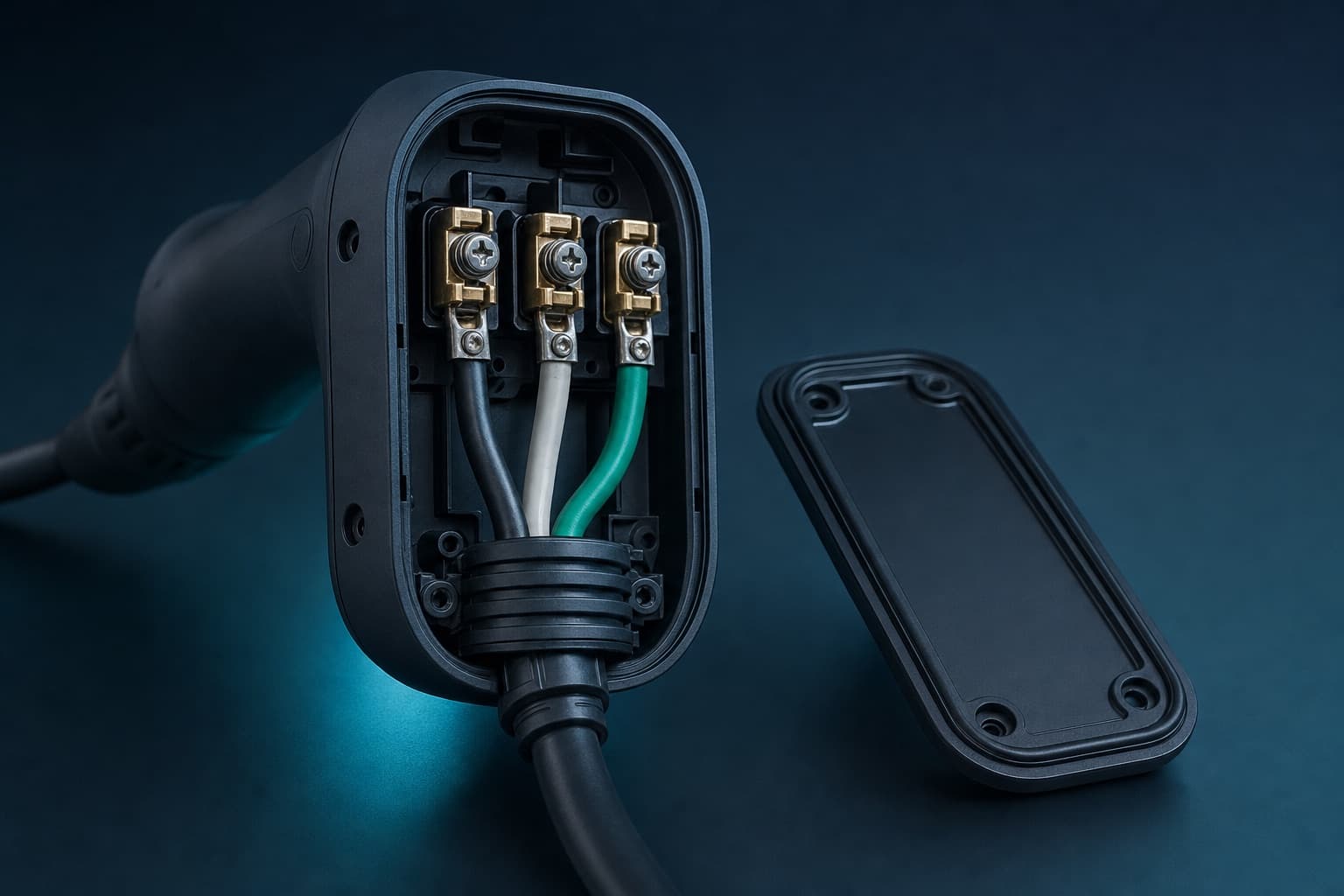
There are two ways to end a charging circuit: at a receptacle that the unit plugs into, or at the unit itself. Both are legitimate. They fail differently, they cost differently, and the choice is usually made for the wrong reason. Everything upstream of it, from reading the panel to commissioning, is identical either way and is laid out in the end-to-end guide.
The case for the outlet
A plug-in unit can be unplugged. That matters in three situations: you are renting and want to take the equipment with you, you expect to replace the unit within a few years, or you want a receptacle that can also serve something else occasionally. Replacing a plug-in unit is a five-minute job for the owner rather than a call to an electrician.
The case against it
A receptacle carrying near its rated current for six hours a night is working harder than almost anything else in a house. Heat at a plug connection is cumulative: a termination that is slightly loose warms, and warming loosens it further. Most of the failures on this kind of circuit happen at the plug and the receptacle, not in the conductor or the device.
Quality of the receptacle matters more here than anywhere else in the building, and it is the component most often chosen on price when it should not be.
Where the choice is not yours
- Above a certain output the unit is hardwired by design, as it is on the Tesla Wall Connector, and the question does not arise.
- Outdoors, some jurisdictions require hardwiring or additional protection that makes a receptacle impractical.
- Where the unit has to share a circuit with a second unit, hardwiring is generally the only route.
The requirements behind each of those are set out under requirements, and the local rule beats the general one every time.
The honest recommendation
If you own the property and intend to keep the equipment: hardwired. Fewer connections, fewer failure points, no receptacle to age. If you rent, or the equipment is temporary, or the property will be sold soon: the outlet, with a receptacle chosen properly rather than cheaply.
The cost difference between the two is small and it is not the reason to pick one; what does move a quote is set out in the cost drivers. The reason is whether the unit is staying.
Decide it with the panel in front of us
Both are correct installations. Which one is correct here depends on the property.
Level 2 Charge Pro installs Level 2 charging equipment: the dedicated 240-volt circuit, the panel work it depends on, the cable run, and the inspection that closes the job.