August 19, 2026 · 6 min
An electrician for an EV charger installation: why, and how to judge one
The people searching this already sense the answer: it is trade work. The real decision is not which charger. It is which electrician.
This query runs at 1,900 searches a month, and the phrasing is telling: the person asking has already understood that the charger is not the project. The project is a new circuit on the fixed wiring of a building, and the decision that matters is who builds it, and how much of a full installation service that party is willing to carry. Here is why the trade matters, and how to judge one bid against another when both come from electricians.
Why this is electrical work and not an accessory install
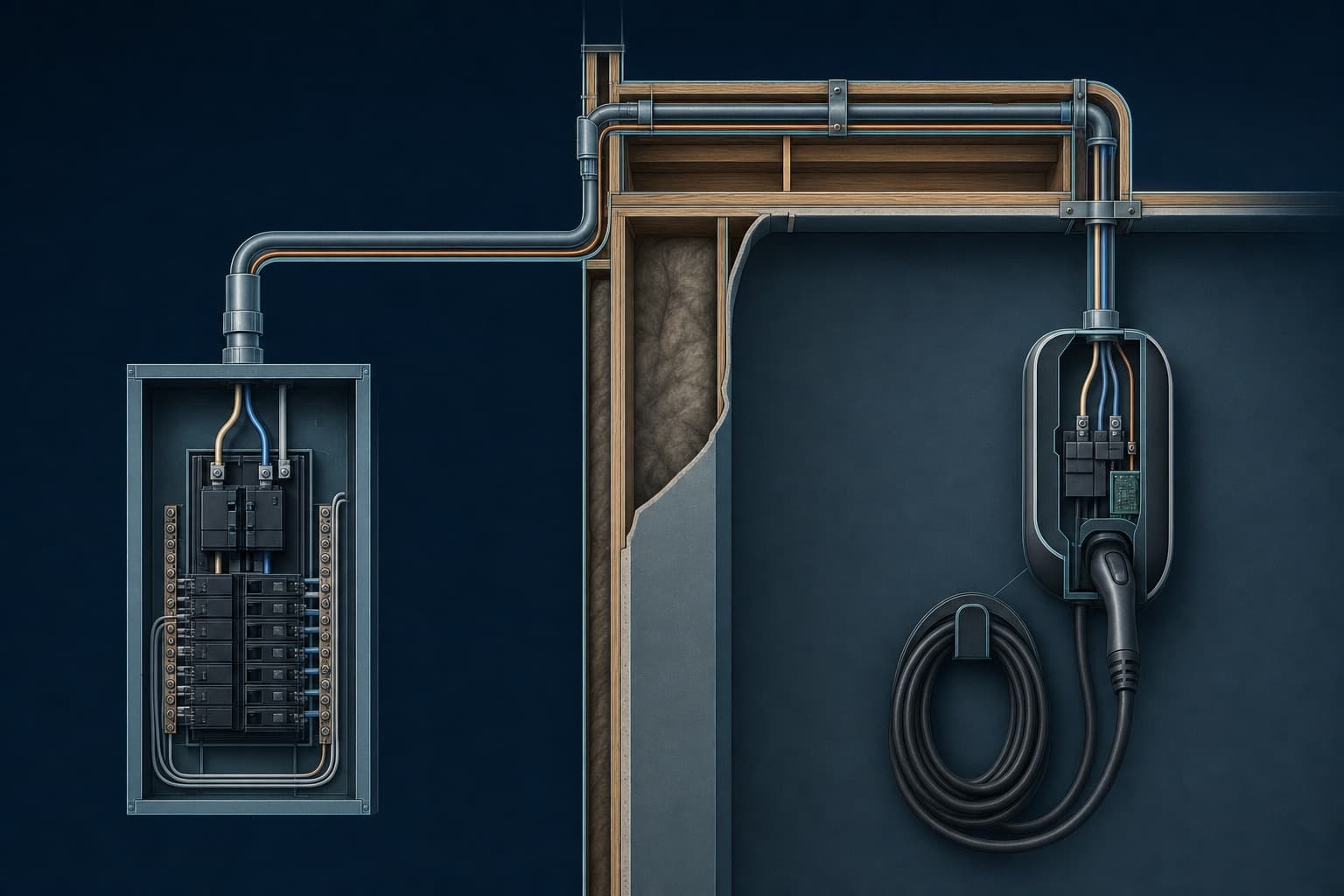
A charging circuit draws close to its full rating for hours at a time, which most household wiring never does. Under intermittent load, a marginal termination or an under-sized conductor behaves acceptably. Under continuous load it heats, and heat at a connection is cumulative. The margin between fine and dangerous on this circuit lives in decisions an electrician makes: breaker sizing, conductor sizing over the real length of the run, torque on the terminations, and the load calculation that precedes all of it.
What kind of electrician
The trade is broad. The relevant experience here is residential service work: panels, load calculations, and dedicated circuits, done frequently. A contractor who installs charging circuits every week has seen your panel before, knows the local inspector, and has stopped being surprised by the route. Volume in this specific work is worth more than size of firm.
What a serious quote contains
A quote is the clearest window into how someone works. A serious one, for this job, states in writing:
- the load calculation, or a commitment to perform and show one;
- the breaker size and the conductor size, named, not implied;
- the assumed route, and what happens to the price if the route changes;
- whether the unit is hardwired or on a receptacle, and why that choice here;
- who pulls the permit and who books the inspection, where required;
- what is excluded, which is where trenching and wall repair hide.
Two bids written to that list can be compared. Two bids that are each a single number cannot, and the gap between them tells you nothing. The forces that move the number itself are covered in the cost drivers.
The permit question is a fast character test
Whether a permit is required depends on the jurisdiction, but in most places this work would be permitted and inspected, and the contractor would be the one to pull it. So ask. An electrician who answers plainly, names the authority and includes it in the price is telling you how the rest of the job will go. One who suggests skipping it is offering to make your problem invisible until the property is sold. The stakes are set out in the permit question.
Questions that reveal competence in five minutes
- What will you look at before giving me a firm price?
- How do you decide between hardwiring and a receptacle?
- What would make my panel unable to take this, and what are the options then?
- Who owns the schedule for the inspection?
None of these has a secret answer. What they test is whether the answers arrive without hesitation, in plain terms, and whether they match what ends up in writing. The technical ground the answers should stand on is summarised under requirements.
Red flags worth walking away from
A firm price given sight unseen, with no questions about the panel or the route. A quote that is silent on the permit. Pressure to buy the charger through the installer without a stated reason. And any suggestion that the load calculation is unnecessary because the house “looks fine”. Each of these is common, and each one predicts the quality of everything you cannot see inside the walls.
What you can prepare before anyone visits
A photo of the panel with the door open, the make and model of the unit if already chosen, which side of the car the port is on, and where the car actually parks. Those four items turn a first call into a real conversation, whoever you end up hiring.
Put the questions to us
Every question on this page is one we expect to be asked. Send the address and ask them.
Level 2 Charge Pro installs Level 2 charging equipment: the dedicated 240-volt circuit, the panel work it depends on, the cable run, and the inspection that closes the job.