September 16, 2026 · 6 min
The cost of charging at home versus a public station: where the gap comes from
The gap is real and it is structural. You do not need a single number to understand it, and any single number printed here would be wrong for your utility.
Few pages answer this question honestly. The honest answer has no dollar figure in it, because electricity rates differ by utility, by plan, by season and by hour. What can be said precisely is where each side’s price comes from, and once that is visible, the comparison mostly makes itself.
What you pay for at home
Energy, at your residential rate, measured by the same meter as the rest of the house. That is the entire recurring cost. The parking space is already yours, the equipment is already paid for, and no one else’s margin sits between the meter and the car. Charging at home is buying electricity wholesale in the only sense available to a household: at the plainest rate you have.
What a public price has to carry
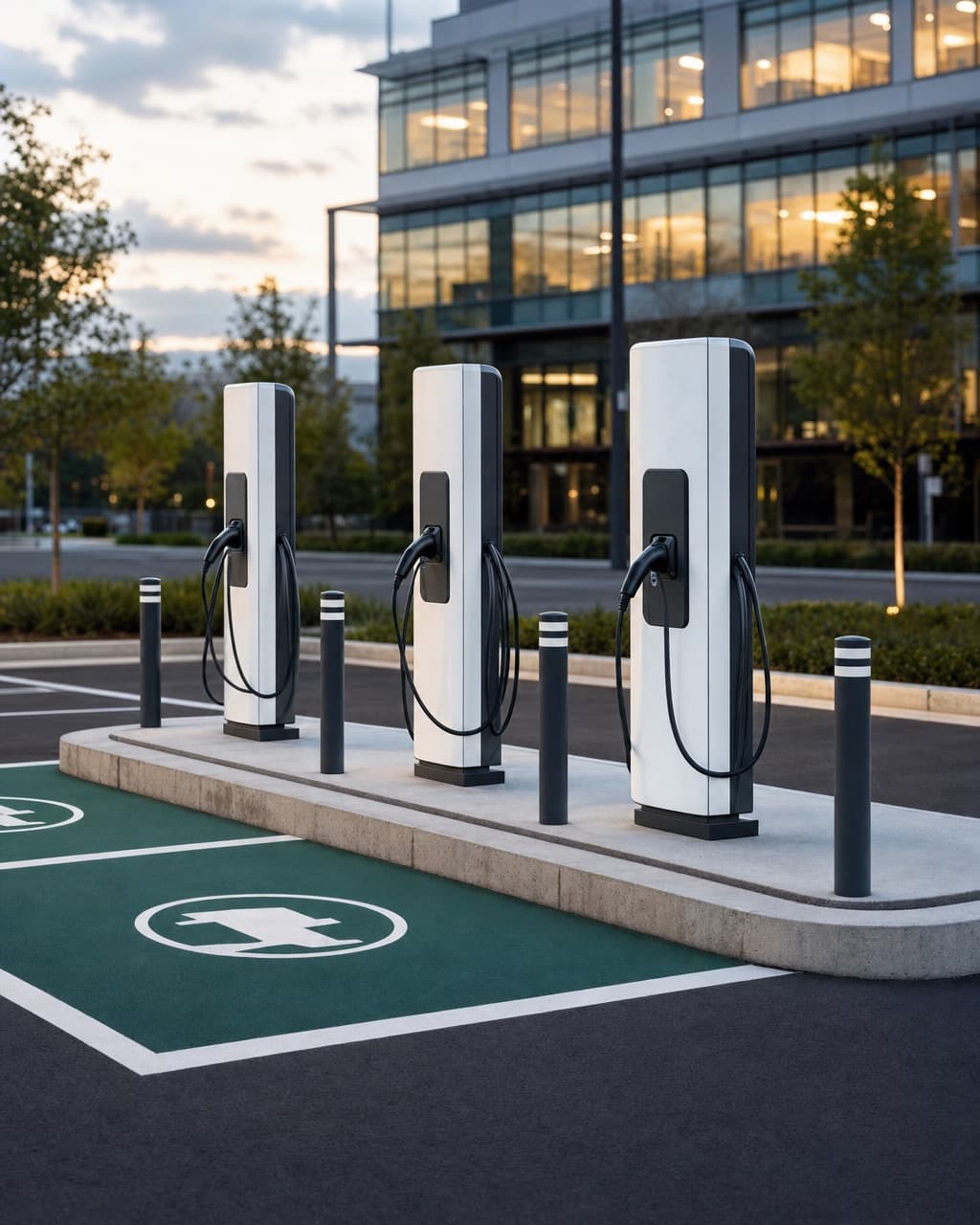
A public station sells you electricity plus everything required to sell it: the hardware and its maintenance, the site and its lease, the payment system, the network behind the screen, and the operator’s margin. Commercial electricity tariffs also commonly include demand charges, fees driven by peak draw rather than total consumption, and fast chargers are machines for creating peak draw. All of that is in the per-session price, because there is nowhere else for it to go.
The speed premium
DC fast charging is the expensive tier of public charging, and reasonably so: the equipment is an order of magnitude more powerful than a residential circuit, and what it really sells is time. Paying that premium on a road trip is rational. Paying it weekly, as a substitute for home charging, is renting speed you do not need, since a car parked overnight has all the time in the world. Level 2 public stations sit in between: slower than the fast chargers, still carrying the site and the operator, and most useful when they happen to stand where the car was going to park anyway.
Time of use, where home charging improves further
Many utilities would offer time-of-use plans that price overnight electricity lower than peak-hour electricity, and some offer plans specific to vehicle charging. A charger scheduled into those windows, which is a standard setting, buys energy at the cheapest hours the utility sells. A household with a rooftop array can push the same logic into daylight, which is what a solar-powered charging station at home amounts to. Whether such a plan exists for your address is a question for your utility, and worth asking before the first full charge.
When the public station still wins
Road trips, obviously. Households with no fixed parking, for whom the home option does not exist; a driveway or a carport still counts as fixed parking, and a circuit run to an outdoor parking spot is ordinary, with the outdoor details that come with it. And the occasional deadline where time is worth more than money. The comparison is not a verdict against public charging; it is a reason to treat it as the exception rather than the routine, the way a household treats restaurants rather than the way it treats groceries.
The one-time cost on the home side
The honest asterisk: home charging requires the circuit to exist, and building it is a real one-time project whose price depends on the panel, the route and the jurisdiction. What moves that number is set out in the cost drivers, and how we approach pricing it is on installation cost.
Why no number appears on this page
Because your rate is not our national average. Two readers of this page can face prices that differ by a factor that would embarrass any figure we printed. The structure above is true everywhere; the arithmetic is local, and doing it with your own tariff sheet takes ten minutes. The home side of the equation starts with home installation.
Put the home side in place
The circuit is the one-time cost, and it is the part we scope and build. The rate is between you and your utility.