September 21, 2026 · 6 min
An electrical panel upgrade: what it is, and when an EV charger actually needs one
Sometimes the panel really is the obstacle between the house and a charger. Often it is a guess. A load calculation tells the two apart before any money moves.
This is the head term of its cluster: 8,100 searches a month, $14.58 a click, and a competition index of 0.10, which is unusually open for a query advertisers pay that much for. Many of the people asking have just been told, often by a charger installer, that their panel “needs an upgrade”. Sometimes that is true. Often it is a guess. This page explains what the work is, when an EV charger genuinely requires it, and how to tell the two apart before any money moves.
What a panel upgrade actually replaces
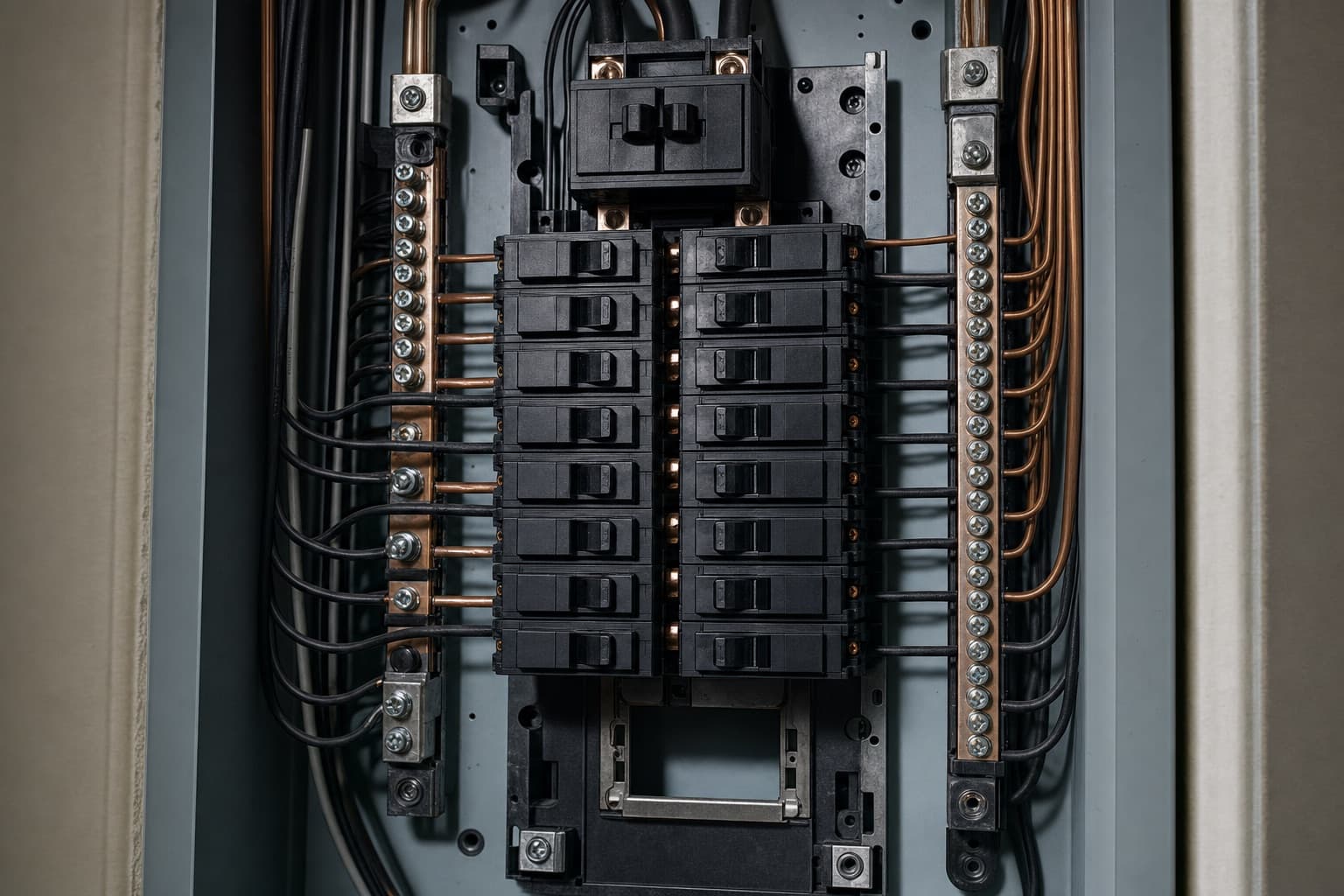
The phrase covers the service equipment of a house: the main panel, its main breaker, and usually the conductors that bring power from the meter to it. Upgrading it means replacing that equipment at a larger rating, so that the house can draw more current at once than it could before. It is distinct from adding a breaker, which is a branch circuit, and from a subpanel, which redistributes capacity the service already has. Only the upgrade changes how much the utility can deliver to the building, and that is why it involves parties a branch circuit does not.
Why an EV charger raises the question
A Level 2 charger is a continuous load. A unit set to 30 A on a 240 V circuit draws near 7.2 kW for hours at a time, night after night, which almost nothing else in a house does. The load calculation a panel must pass treats that draw as present, and adding it to an older service that already carries electric heat, a range, a dryer and air conditioning can push the arithmetic over the line. That is the real mechanism: not the size of the charger in itself, but its size added to what the service already has to carry at the worst moment.
When the calculation says no upgrade is needed
The load calculation is the whole decision, and it is done before anything is recommended. It follows a defined method under the code edition in force in your jurisdiction, applied to the service rating, the connected loads and the demand factors that apply to them. Three outcomes avoid an upgrade entirely. The service has capacity to spare, which is common in houses with gas heat and cooking. The charger can be set to a lower output at commissioning, since a car parked overnight rarely needs the maximum. Or a load management device can be fitted that pauses or reduces the charger when the rest of the house draws hard, which most code editions would allow to be counted in the calculation. Those routes are described under panel and capacity, and each is a far smaller project than a service change.
When it says yes
Some houses are genuinely at the limit. A small service feeding electric heat, an electric water heater, an electric range and a dryer, with a second vehicle in the plan, may have no output setting that fits. The panel may also be physically full, or of a type that no longer accepts new breakers. And some owners want the headroom on purpose, because an array, storage and a second charger are coming, and one service change now beats three visits later. In each of those cases the upgrade is the right answer, and the calculation is what shows it, in writing, rather than a glance at the door of the panel.
What the work involves
An upgrade touches the utility side of the meter, which is why it is more than a day’s wiring. In most jurisdictions the sequence would run: a permit application, coordination with the utility to disconnect and later reconnect the service, replacement of the meter base and service conductors where the new rating requires it, installation of the new panel with every existing circuit re-landed and labelled, grounding and bonding brought up to the current edition, an inspection, and the utility’s release to re-energise at the new rating. Where the charger circuit is planned at the same time, it is built into the new panel during the same visit, and what that circuit consists of is set out in the end-to-end installation guide.
What changes by jurisdiction
Nearly everything procedural. Whether a permit is required, whether the utility must approve the new rating before the work, whether the meter base is theirs or yours to replace, what the inspection covers, and which code edition applies are all set locally, sometimes at the city rather than the state level. We confirm those for the address before quoting rather than after. What the permit protects, and what skipping it costs, is the subject of the permit question.
The order that avoids paying for the wrong thing
Calculation first, recommendation second, price third. An upgrade proposed before a calculation is a guess, and an expensive one. An upgrade proposed after one, with the arithmetic shown, is engineering. Send a photo of the panel with the door open and the model of the charger you have in mind, and we will tell you which of the two you are looking at. That is how home installation begins.
Have the calculation done first
Send a photo of the panel with the door open and the charger you have in mind. We will tell you whether an upgrade is engineering or a guess.